

Rewiring the Inherited Patterns of Thought for a Post-Generational Era
By Christopher Fredrick-Orumah | MindGraph Academy

“Evolution of thought through generations.”
The Hand-Me-Down Mind
Most people inherit more than DNA.
They inherit ways of thinking and being— emotional reflexes, attitudes, cultural assumptions, and unspoken rules about what’s possible. These mental hand-me-downs shape how we interpret the world, things and life choices we pursue, and what we quietly avoid.
You didn’t choose the psychological architecture you live in; it was orchestrated prior to your arrival and passed down to you — assembled by the experiences, fears, and worldviews of those who came before you. Yet, the future doesn’t belong to inherited minds; it belongs to designed ones.
That is the essence of the Future Mind — a mind that consciously adapts and upgrades itself, generation by generation, refusing to run on the outdated code of the past.

“Breaking free from inherited thinking patterns.”
The Psychology of Inheritance
Psychologists call this cognitive lineage — the transference of infrastructures: of thought patterns, emotional responses, and even self-beliefs across generations.
We not only grow up in families; we grow into mental ecosystems.
A parent’s scarcity mindset may become the child’s invisible ceiling.
The cultural attitude toward failure then becomes a family’s quiet rule: “Don’t try what you can’t guarantee.”
And an entire community or society may pass down implicit algorithms for what intelligence, success, or love should look like.
These inherited scripts become our default settings — familiar and limiting. Until we question them, they shape what we perceive as normal, realistic, or possible.
How the Mind Ages Culturally
Just as the body ages biologically, the mind ages culturally.
It becomes adapted to the conditions it was raised in. This raises a few problems- the wars and challenges they have once strategised against are not desolate and gone. Those conditions have already changed.
Your education trained you for a world that no longer exists.
Your emotional conditioning evolved for social systems that are now digital.
Your goals were designed for a version of “success” that’s obsolete in a world driven by creativity, adaptability, and cross-disciplinary intelligence.
This is what we at MindGraph call cognitive lag — the delay between the world’s evolution and our mental evolution.
The Future Mind eliminates that lag by learning how to upgrade itself.
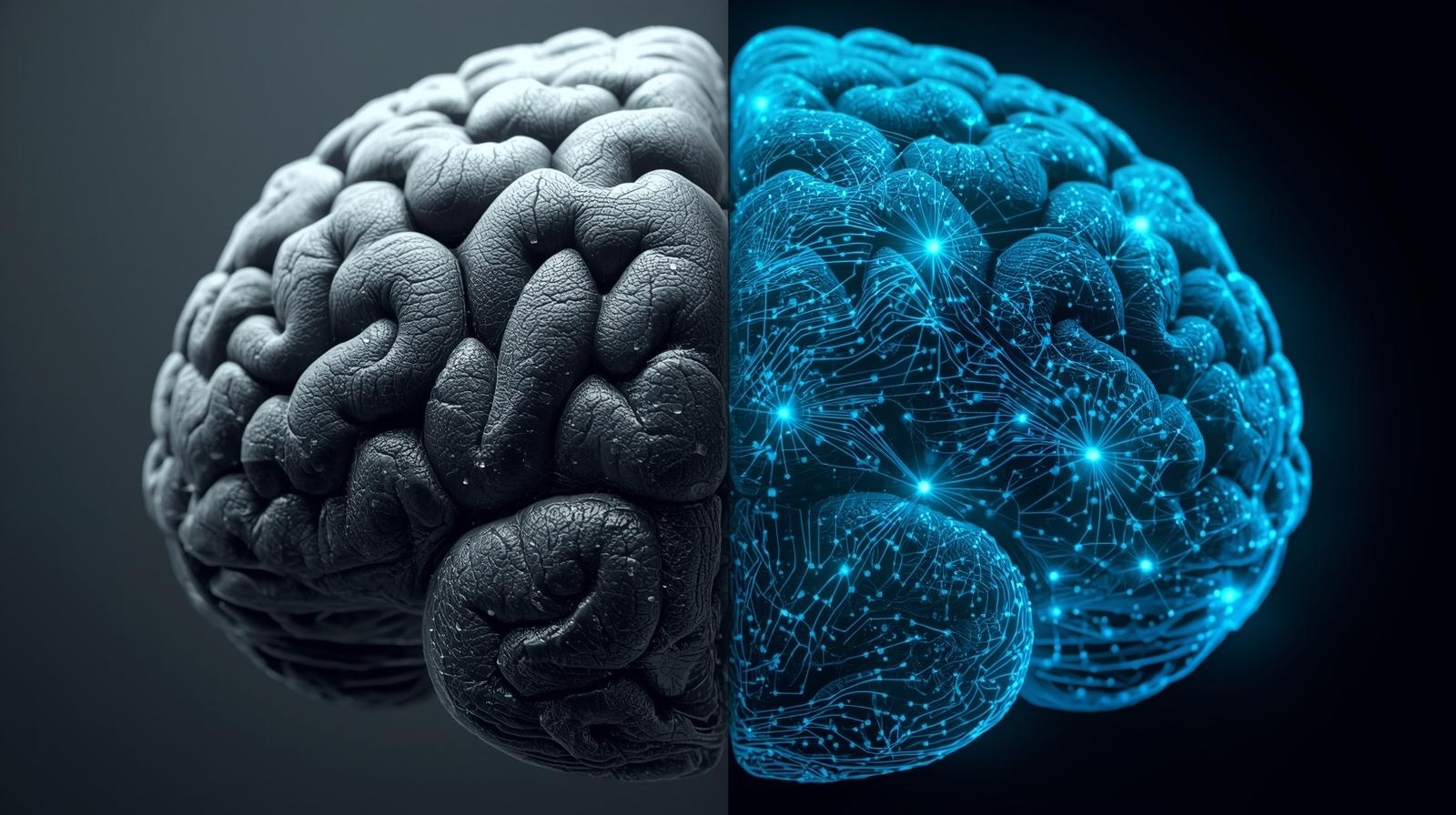
“From static cognition to dynamic intelligence.”
Thinking Forward, Not Backward
The Future Mind doesn’t ask, “What do I know?”
Rather, it asks, “What else is there or could be known if I let go of what I believe?”
That question alone separates creative thinkers from cultural replicators.
Forward thinking involves three active practices:
- Cognitive Rewilding — exposing your mind to new, unfamiliar ideas and cultures to disrupt default neural pathways.
- Temporal Awareness — recognising when your thinking belongs to a past context.
- Mental Prototyping — experimenting with new perspectives before adopting them as truths.
This is the work of creative intelligence: not just knowing more but knowing differently.
Designing the Future Mind
MindGraph Academy defines Creative Intelligence as the synergy between cognition and emotion that allows a person to adapt, design, and innovate.
The Future Mind applies this principle across time — designing its own evolution.
A Future Mind:
- Treats identity as an ongoing prototype, not a fixed label.
- Merges logic and empathy to interpret complexity.
- Operates from curiosity, not confirmation.
- Designs systems of thought that outlast circumstances.
This is not mere positive thinking; but Moreso, an architectural thinking.
You become both the builder and the blueprint of your cognition.
The MindGraph Way Forward
At MindGraph, we believe that every human being is a living design system.
Your thoughts, emotions, and behaviours are not random; they are architectural outputs shaped by your cultural and psychological infrastructure.
The Future Mind is the next phase in human psychology — a shift from reactive intelligence (responding to conditions) to creative intelligence (redesigning conditions).
In our framework — Mind | Design | Execution | Belonging — the Future Mind sits at the intersection of the following four:
- Mind: Awareness of inherited programming.
- Design: Conscious reconstruction of thinking.
- Execution: Applying new mental architecture to real action.
- Belonging: Building communities that evolve together.
Becoming the Prototype of the Future Mind
You are not here to preserve what you inherited.
But rather, you are here to advance it.
Every thought you redesign; to advance and power an improved output, becomes a gift to the next generation — a cleaner template for collective consciousness.
Worthy of note, the Future Mind is not about intelligence alone; it’s about inheritance with intention.
It must ask: What will the next generation of thought look like through me?

“Becoming the prototype of the Future Mind.”
Reflection Prompts
- Which mental patterns in your life feel “inherited” rather than chosen?
- What part of your mindset feels outdated — and what would an upgrade look like?
- If the next generation adopted your current way of thinking, would the new world be advanced or be a repeat itself- a set of limiting behavioural patterns?
© MindGraph Academy | MindGraphAcademy.com
Written by Christopher Fredrick-Orumah
Join the movement: #ThinkAndGrowUp #CreativeIntelligence #MindGraphAcademy